

-
Início

-
Áreas de atividade
-
Comunicação
-
Notícias
- Ocean Winds apresenta relatório «Coexistência entre a energia eólica offshore flutuante e a biodiversidade: um relatório baseado em dados do WindFloat Atlantic»
Ocean Winds apresenta relatório «Coexistência entre a energia eólica offshore flutuante e a biodiversidade: um relatório baseado em dados do WindFloat Atlantic»
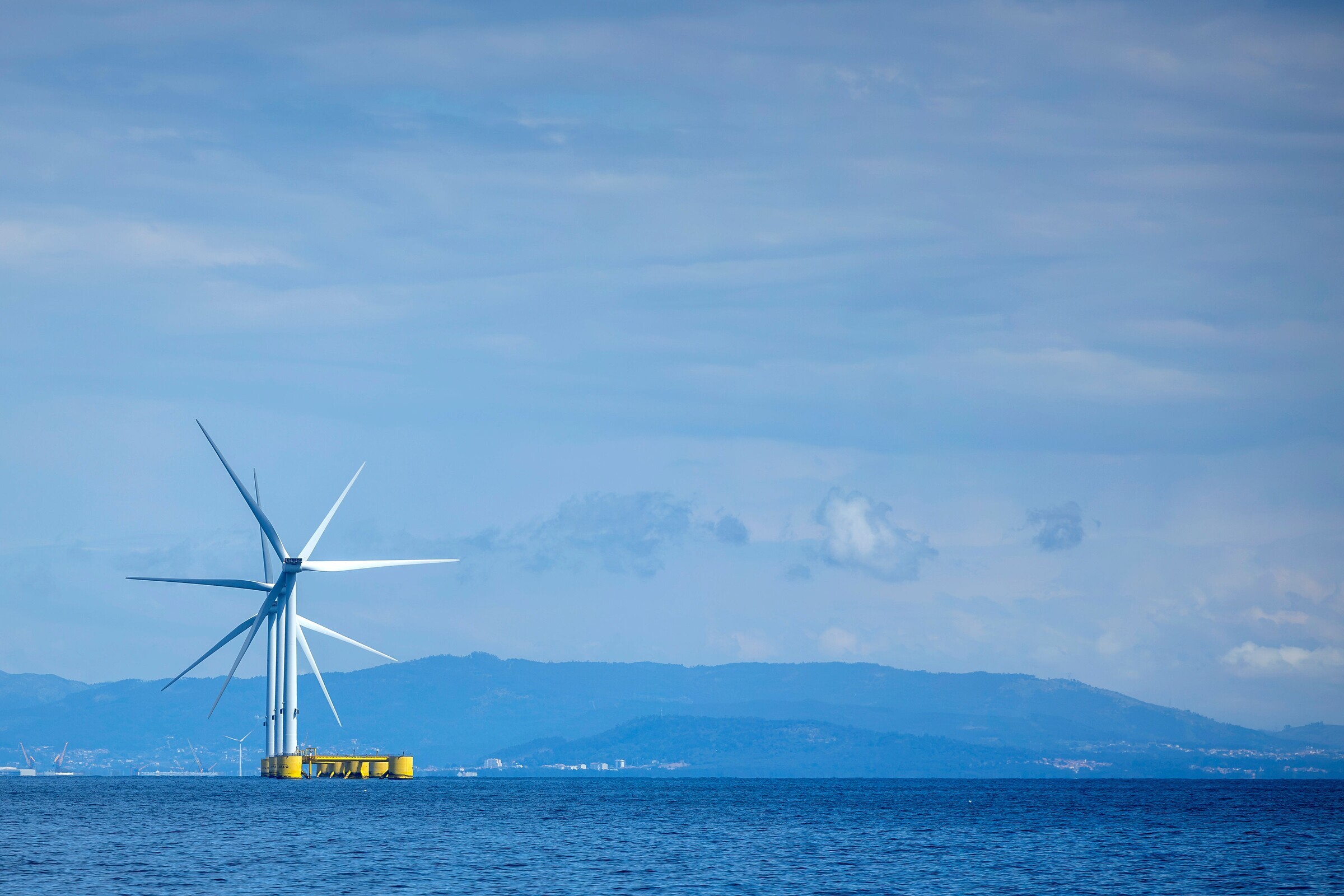
A Ocean Winds apresentou o relatório «Coexistência entre a energia eólica offshore flutuante e a biodiversidade: um relatório baseado em dados do WindFloat Atlantic» no evento anual da WindEurope, em Madrid.
• Este relatório científico agora divulgado apresenta os resultados de 8 anos de monitorização ambiental do parque eólico offshore flutuante WindFloat Atlantic, em Viana do Castelo, Portugal, demonstrando que os parques eólicos offshore podem coexistir com a biodiversidade marinha.
• Entre as principais conclusões, os investigadores observaram um aumento geral na abundância de polvos e de várias espécies de peixes, em particular de elasmobrânquios. Foram identificadas mais de 270 espécies na área do parque eólico offshore WindFloat Atlantic.
Ocean Winds unveils the “Floating Offshore Wind & Biodiversity Coexistence: A Data-Driven Report from WindFloat Atlantic” at WindEurope Annual Event 2026
• This newly released scientific report presents eight years of environmental monitoring results from the WindFloat Atlantic floating offshore wind farm in Viana do Castelo, Portugal, demonstrating that offshore wind farms can coexist with marine biodiversity.
• Among the key findings, researchers observed a general increase in the abundance of octopus and various fish species, particularly elasmobranchs. More than 270 species have been identified in the WindFloat Atlantic offshore wind farm area.
April 22nd, Madrid. Ocean Winds (OW), a global leader in offshore wind energy and a 50–50 joint venture between EDP Renewables and ENGIE, unveils the results of a scientific biodiversity report at the 25 MW WindFloat Atlantic project, the world’s first semi-submersible floating offshore wind farm, located approximately 20 kilometres off the coast of Viana do Castelo and where OW is the main owner and operator. These findings are based on eight years of environmental monitoring campaigns and include complementary studies that go beyond regulatory environmental requirements.
With a commitment to understanding, monitoring, and preserving the marine ecosystem, this report presents a comprehensive set of environmental studies conducted across all project phases and continues to this day. It was produced by the independent consultancy partner Blue Grid and benefited from the valuable contribution of two of Portugal’s most prestigious research institutions: the MARE – Marine and Environmental Sciences Centre at the Faculty of Sciences of the University of Lisbon (MARE-ULisboa) and the Polytechnic of Leiria (MARE-IPLeiria).
The report concludes that natural seasonal and interannual variability are the main drivers shaping marine communities across all trophic levels. While spatial differences were observed between the WindFloat Atlantic area and the control sites - particularly in nektonic-benthic invertebrates, including octopus, and fish communities such as elasmobranchs - overall abundance was higher within the project area. Notably, the findings indicate that WindFloat Atlantic did not disrupt ecosystem functioning. Instead, the fishing exclusion zone and reef effect has delivered clear local ecological benefits, acting as a refuge and feeding area that enhances habitat protection for the underwater fauna.
In line with these results, no negative impacts were detected on lower trophic levels, such as phytoplankton and zooplankton, while positive ecological effects were observed at higher trophic levels, including invertebrates and fish. Overall, the findings highlight a thriving ecosystem driven by a strong reserve effect from overall navigation exclusion and reef effects. They demonstrate that floating wind farms can serve as important ecological havens, support biodiversity, and provide feeding grounds for marine life.
Complementing these results, comprehensive environmental monitoring of marine mammals, birds, bats, and broader biodiversity recorded 5 marine mammal species, 33 bird species, 3 bat species, and 52 fish species in the WindFloat Atlantic area. The site is primarily used as a migration route, with increased dolphin and porpoise activity observed during operation. Although some vulnerable and critically endangered species were identified, no significant negative impacts—such as bird collisions or bat roosting—were detected. Fish diversity was high, including species of commercial and conservation interest, with some showing greater abundance within the project area.
Teresa Simas, experienced senior researcher in offshore renewable energy industry and Chief Executive Officer at Blue Grid, stated: “The WindFloat Atlantic biodiversity monitoring program offers valuable evidence from a floating offshore wind farm, showing that the project generates measurable ecosystem service outcomes – including enhanced fish and invertebrate abundance through reef and refuge effects – and highlighting the importance of sustained environmental monitoring to inform the responsible scaling of floating wind technology.”
Lino Costa and Bernardo Quintella, senior researchers from the Faculty of Sciences of the University of Lisbon (MARE), affirmed: "The monitoring of WindFloat Atlantic has been an excellent opportunity to increase the knowledge about the marine ecosystem of northern Portugal and to better understand how to reconcile the development of floating wind farms with biodiversity conservation and fisheries."
Catarina Rei, Permitting and Environment Director at Ocean Winds, added: “The findings from WindFloat Atlantic provide robust, data-driven evidence that floating offshore wind can coexist with biodiversity, and even create positive local ecological effects. This reinforces Ocean Winds’ approach to responsible development as we continue to scale up our floating wind portfolio internationally, moving from pilot projects to full commercial-scale developments in harmony with marine ecosystems.”
The results of this study are in line with previous research on the contribution of offshore wind farms to ecosystem services providing food resources, showing that, in addition to promoting local biodiversity, they can also stimulate commercial fishing, generating benefits for local communities.
With this report, Ocean Winds demonstrates that it develops and operates its wind farm in harmony with the marine ecosystem and reinforces its commitment to leading the expansion of floating wind energy, promoting its full potential globally.